
Reading time: 10 minutes
Social Media Trends and Developments 2026 - Part 2: What Works? From Social CEO to Cultural Moment
The Essentials at a Glance
What are the Trends and Developments in Social Media Marketing in 2026?
- Mobile first is a basic requirement, TikTok first is fundamental logic.
- It is the people behind the companies who create trust, not just the content or logos.
- Social CEOs and corporate influencers are no longer just a nice-to-have.
- Creator brands show that committed, loyal communities inspire classic brand management.
- Less gloss, more attitude: debranding is a strategic decision.
- Reach is becoming more fragmented, relevance is emerging in niches.
- Communities provide proximity, feedback, and stronger brand loyalty.
- Presence is important where target groups are really active.
- Cultural moments work when they fit the brand.
In 2026, social media will function as a system of two forces: AI will make marketing faster and cheaper, while at the same time the demand for authentic brand communication will increase.
We take a look at where technology alone is not enough: at senders, platform logic, communities, and the question of what role brands play in feeds and cultural moments. What will be relevant in 2026:
- Campaigns must be designed and implemented with mobile first and TikTok first in mind.
- The people behind companies are becoming more important than content or logos.
- Advertising must appear native in order to be noticed at all.
- Attention is shifting to niches and communities.
- Distribution is becoming a must, not an option.
- Cultural moments are becoming a lever for organic reach.
In this article, we take a closer look at trends beyond AI. Part 1 focuses on AI-driven shifts: automation in advertising, content overload, new AI interfaces, scalable identities, and global reach.
Table of Contents:
- Mobile first, TikTok first
- Creator in the classic campaign mix
- People as senders: Why brands need faces
- De-branding: The less promotional, the better the advertising
- Community & Niches: One-size-fits-all is over
- Followership as currency: UGC, exclusivity, and new formats
- Cultural Moments Marketing: Attention, be quick
- Takeaways for brands
- Conclusion
Mobile first, TikTok first
Mobile first will no longer be a trend, but a basic requirement in 2026. Mobile devices are the first touchpoint for digital communication, interaction, purchasing processes, and service. Campaigns work better when they are designed for mobile from the outset rather than being adapted retrospectively.
TikTok first continues to prevail as a logical approach: visibility on social media is increasingly generated through relevance signals. Content is played because it is interesting to users, regardless of the sender or existing followers. This mechanism has shaped TikTok from the beginning and is now increasingly spreading to Instagram.
What's more, trends often emerge first on TikTok and only appear on Instagram later. TikTok is thus becoming a testing ground for formats, sounds, and narrative styles. Advertising is often perceived as more organic there because the content as a whole appears more native, lo-fi, and less polished. Brands that are not active on TikTok should therefore still design content for other platforms as if it had to exist in a TikTok feed.
Creator in the classic campaign mix
If you want to build reach efficiently today, you need content that feels native. That's exactly why creators are becoming more prominent in the campaign mix again.
Advertising messages are often perceived as more credible when delivered by creators because they bring trust, social proof, and a clear testimonial effect. Content feels less like traditional advertising because it is more closely aligned with platform culture and the target audience.
Added to this is the proximity to the target group: with the right creators, you can reach your target group more precisely, with an engaged community and less wastage. Creators also open up more opportunities for storytelling and provide rapid feedback loops: response and sentiment are directly visible, allowing content to be quickly refined and scaled. Content that works on mobile devices can then be extended as assets in ads and other channels (other platforms, but also TV, radio, OOH, etc.). Creator marketing thus remains usable across multiple funnel stages.
People as senders: Why brands need faces
The more space AI-generated content takes up in our feeds, the more valuable the opposite becomes: personal content from real people. Welcome to the era of social CEOs, creator brands, and the end of glossy content!
70% of all consumers feel more connected to a brand when its executives are active on social media. A good example of this in the German-speaking world is Tim Höttges, CEO of Telekom: He is active on LinkedIn, TikTok, and Instagram, giving the brand a clear, human face.
Companies with a visible “social CEO” benefit from more applications, more customer inquiries, and greater overall attention. Accordingly, social media is increasingly evolving from a voluntary option to a strategic expectation for many executives.
Creator brands are proof that personality helps brands grow: personalities with a large reach use their visibility to build brands together with companies or found their own brands and scale them through their community.
A good example of this is Hailey Bieber's skincare brand Rhode, which she was able to sell for around one billion US dollars within a few years: growth that would hardly have been possible without her fame and reach. The underwear brand Skims has also largely detached itself from Kim Kardashian as a person, but its initial success is clearly based on her reach.
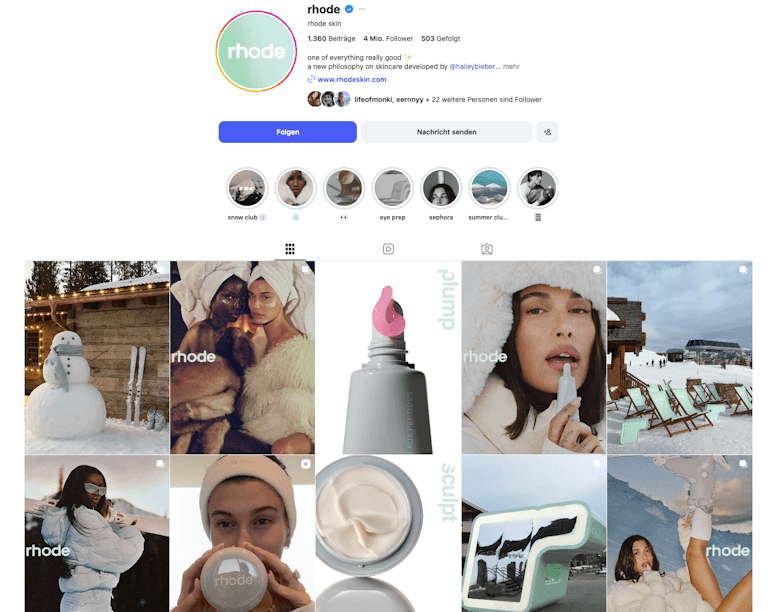
In summary, this means that brands can no longer define themselves solely through their products, but benefit from recognizable faces to build trust, closeness, and recognition.
De-branding: The less promotional, the better the advertising
In 2026, more than ever before, users on social media don't want to see traditional advertising, but rather added value, people, and interesting content. Paradoxically, the less promotional brands appear, the better their advertising often works.
Lo-fi aesthetics reinforce this effect. In a world where content is increasingly perfect thanks to AI and image editing, formats that are raw, unfiltered, and approachable are gaining relevance. Content (and therefore advertising) does not have to be a glossy production to work. On the contrary, simple posts that deliberately appear to be of “low quality” can perform particularly well.
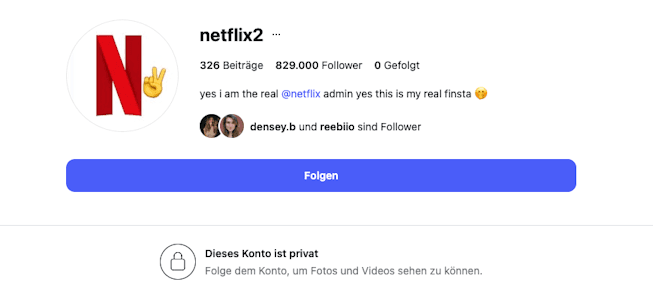
This approach is implemented even more consistently with so-called secondary or Finsta accounts (“fake Instagram accounts”), as practiced by Netflix with its “netflix2” account. The account is private, and anyone who wants to see the content must first submit a follow request, which creates a certain desirability. In terms of content, the account does not adhere to classic corporate design guidelines, but works with memes, screenshots, and spontaneous formats. This greater freedom in content creation makes it possible to operate closer to the platform culture and publish content without complex approval processes, which in turn can have a positive effect on advertising impact.
Community & Niches: One-size-fits-all is over
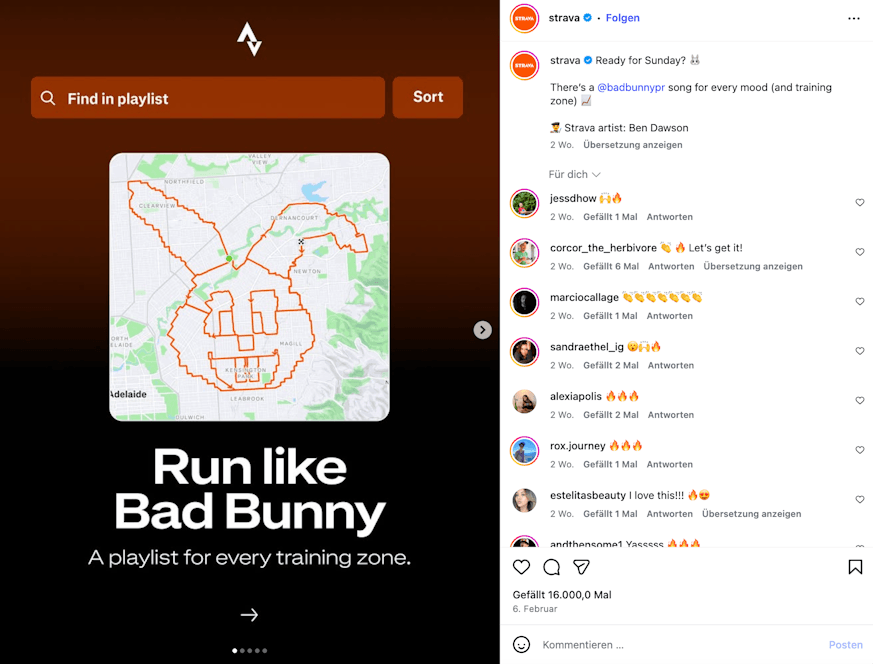
Platforms such as Strava, Reddit, and Twitch illustrate this well: among younger target groups in particular, social media use is increasingly spreading to specialized platforms and communities where people organize and exchange ideas around specific interests.
This makes the environment more challenging for brands, but also offers enormous advantages. A presence on major platforms such as Meta remains relevant, but is increasingly rarely sufficient on its own. Visibility arises where target groups actually spend time, or where you can bring the target group.
The added value of communities lies primarily in the quality of the relationship: authentic interaction instead of one-way communication, genuine emotional closeness to the brand, higher engagement, and greater loyalty. Communities can also indirectly increase reach, for example through reposts and recommendations within the group. At the same time, a direct feedback channel is created that is faster and more honest than many traditional market research setups. The result is stronger brand loyalty.
Communities are not only platform-driven, but often brand-driven as well: some start out as groups and then look for the right place, while others are deliberately built up by brands, for example via broadcast channels, newsletters, events, or their own community formats. The decisive factor is not so much the platform as the question of where the community will function in the long term and how closely the brand can meaningfully connect with it.
Followership as currency: UGC, exclusivity, and new formats
Social media platforms are providing creators and brands with more and more tools to not only build communities, but also to monetize them and strengthen customer loyalty. Three formats will be particularly prominent in 2026:
- Micro-gifting (real-time monetization): On TikTok Live, viewers can give digital gifts that generate revenue for creators. This translates the community directly into sales.
- Hidden content (exclusivity as access): Hidden reels or stories on Instagram are only accessible via a code, discount, or code word. Content is specifically unlocked for a selected community, often in exchange for payment.
- Broadcast channels (proximity without feed algorithm): Instagram broadcast channels function as a direct line and are essentially a one-to-many DM channel: a brand or creator sends updates directly to all subscribers. The community can respond, but the channel remains structured and is not slowed down by the feed algorithm. For brands, this is particularly exciting for drops, announcements, behind-the-scenes content, surveys, or exclusive links, because content arrives there more reliably than in the public feed.
For brands, this means that community becomes more measurable and valuable. Access becomes scarcer, and exclusivity becomes the norm.
Cultural Moments Marketing: Attention, be quick
A globally perceived event becomes a pop culture moment that almost everyone knows and can relate to. This event remains present in the collective memory for a period of about two to four weeks. Brands can benefit from this time window if they quickly and appropriately translate the moment onto social media. However, the rule is: first come, first served.
One example is Taylor Swift's engagement: many brands creatively interpreted this moment and integrated it into their communications, for example through visual recreations using their own products. Such posts achieve high interaction rates because they rely on a cultural context that is already highly present.
Cultural moment marketing – also known as “newsjacking” – thus offers brands the opportunity to achieve high attention and organic reach in the short term, provided that the connection to the event is comprehensible and fits the brand.
Takeaways for brands
- Mobile first is a basic requirement, TikTok first is fundamental logic.
- It is the people behind the companies who create trust, not just the content or logos.
- Social CEOs and corporate influencers are no longer just a nice-to-have.
- Creator brands show that committed, loyal communities inspire classic brand management.
- Less gloss, more attitude: debranding is a strategic decision.
- Reach is becoming more fragmented, relevance is emerging in niches.
- Communities provide proximity, feedback, and stronger brand loyalty.
- Presence is important where target groups are really active.
- Cultural moments work when they fit the brand.
Conclusion
In 2026, social media will not become quieter, but more selective. Reach will no longer be generated automatically by presence, but by fit: to the format, the platform culture, and the community. Brands that use social media as a one-way channel for campaign messages will be overlooked. Brands where it is clear who is speaking, such as the CEO, employees, or creators, will build relationships and remain memorable.
Success depends less on individual hacks than on consistent brand management in everyday life: clear faces, clear tonality, an understanding of platform logic, and a willingness to take community work seriously. Cultural moments can accelerate in the short term, but they cannot replace a solid foundation.
If you want to understand why visibility is becoming both easier and more difficult, this article explores the technological side of this development and the AI-driven changes that are influencing the world of social media.